Fractionated CO2 Laser Skin Resurfacing Fort Lauderdale / Boca Raton
Facial aging is accelerated by prolonged sun exposure, which can lead to premature wrinkling, dyschromias (brown spots), and irregular skin texture. Because of these unwanted changes, men and women often seek facial plastic surgery to reverse the effects of sun damaged skin. In some cases, surgery may be recommended to remove pre-cancerous skin growths known as keratoses. Sun exposure also may lead to the development of skin cancers, which can require surgical excision and subsequent reconstruction.
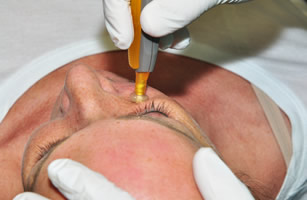
Laser skin resurfacing is a procedure that can help rejuvenate the skin and reduce the effects of the sun and aging. By causing changes to skin, the treatments produce younger, healthier looking skin by targeting sun-damaged and/or scarred skin. In the past, laser resurfacing treatments were very effective, but were hampered by significant downtime and unwanted skin pigmentation changes. The CO2 laser was considered to be the ‘gold standard’ for facial resurfacing and rejuvenation. In order to produce a laser with the unparalleled results of the CO2 laser but with minimal downtime, Lumenis developed the UltraPulse fractional CO2 laser. With fractional technology, a fraction of the skin is treated, leaving zones of untreated areas of skin in between, which leads to more rapid healing. This resurfacing laser can deliver three different treatments: Active FX, Deep FX, and Total FX. All three treatments produce dramatic results with minimal risk and downtime. The UltraPulse laser is considered by many to be the ‘gold standard’ for laser skin resurfacing, with numerous studies demonstrating its superiority over other lasers.
Laser resurfacing is an effective non-surgical treatment to achieve
facial rejuvenation.
The patient wore no makeup in either photo.
Overview:
The Active FX treatment produces improvement in skin tightening, wrinkle reduction, skin texture, and pigment abnormalities. It is performed in a single treatment, and downtime is typically one week or less. Other fractionated lasers typically require more than one treatment; Active FX, on the other hand, is performed in one treatment. Discomfort is minimal.
The improvement in skin tone and texture creates a visible ‘glowing’ look to
the entire face. No makeup other than lipstick was worn in either photo.
With the Deep FX treatment, the laser travels deeper into the skin to cause more collagen growth and skin tightening. It is extremely effective for acne scars and deep wrinkles. It is safe for most skin types, including Asian and Hispanic skin.
Combining both a Deep FX and an Active FX treatment is termed a Total FX treatment. This is an excellent way to maximize results, by producing the ultimate in laser skin resurfacing and skin tightening.
Reduces wrinkles, pore sizes, and fine lines
Immediate skin tightening after one treatment
Improved skin tone and texture
Smooths depressions in the skin, such as acne scars and deep wrinkles (Deep FX)
Minimal downtime – usually less than a week
Short procedure time – less than 30 minutes for a full face treatment
Stimulation of collagen growth for up to six months
Long-lasting results that can continue for many years
Good Candidates:
Patients with any degree of sun damage are good candidates for laser resurfacing. While lasers in the past were reserved for lighter skin types, the UltraPulse is considered safer for darker skin types as well. The degree of sun damage dictates the treatment that is needed. Most patients benefit from the Active FX treatment, but deeper wrinkles and acne scars are better treated with a Total FX treatment. For patients that want a lighter ‘laser peel’ with almost no downtime, we offer a Weekend Laser Peel. This is usually best suited for younger patients with less sun damage. Patients who have taken Accutane in the past 12 months or have a history of keloid scarring should not undergo treatment.
Procedure Details:
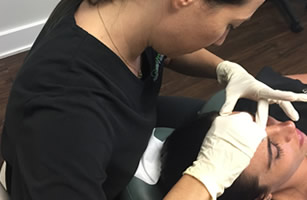
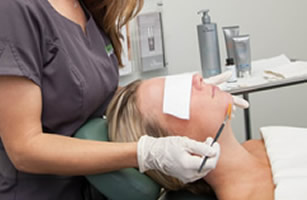
For most patients, a topical anesthetic is all that is required for the procedure. Depending on the degree of treatment needed, most laser treatments are completed in less than 30 minutes, done in a comfortable setting in our office. Our staff will show you how to care for your skin while at home.
Recovery:
Patients return home immediately following the resurfacing. Caring for your newly resurfaced skin while at home is straightforward. We provide all instructions for you at your initial visit. Usually Dr. Greene recommends specific medical-grade products to accelerate the healing process. Typically the skin peels (like a sunburn) in four to five days, and the newly resurfaced skin can then be seen. After this, protection from the sun is extremely important. We can provide tinted sunscreen and make-up products for the patient to use when outdoors. These products have become so popular with Dr. Greene’s patients that they often continue to use them on a regular basis.
Fractional Laser Resurfacing Videos
Follow a patient's journey as she undergoes the Active FX treatment
2020 Story on burn victims who had Lumenis Laser Skin Resurfacing for their Scars
The Ultrapulse Encore is a CO2 laser that can deliver both light (Active FX) and deep (Deep FX) laser treatments to resurface and rejuvenate the skin. It works by emitting ‘ultrapulses’ of light that are absorbed by water in the skin. This will help to improve the appearance of fine lines, wrinkles, brown spots, scars, and other skin irregularities. The laser procedure stimulates the formation of new collagen to give the skin better elasticity and support. The result is more radiant and youthful looking skin with better tone and texture.
What are the advantages of the Ultrapulse laser over other resurfacing lasers?
There are many advantages of the Ultrapulse laser that Dr. Greene will explain during your consultation. The Ultrapulse delivers very safe and effective treatments and is considered by many to be the ‘gold standard’ for fractionated laser resurfacing.
Who is a good candidate for Ultrapulse laser resurfacing?
Good candidates for an Ultrapulse laser resurfacing procedure are physically healthy man or woman with realistic expectations. Patients whose skin has any degree of sun damage would benefit from laser resurfacing. Different skin types may respond differently to a laser treatment, and this will be discussed with you during your consultation.
Where are Ultrapulse laser procedures performed?
These procedures are performed in Dr. Greene’s office.
How long does a laser resurfacing procedure last?
These procedures can take anywhere from thirty minutes to one hour to complete.
What can I expect after an Ultrapulse laser procedure?
Most patients will notice an improvement after the skin peels, but this will refine over a period of approximately three months. Laser resurfacing can restore the skin to a healthier and more youthful state, similar to skin that has not experienced sun damage or scarring.
How long do the results of an Ultrapulse laser procedure last?
With proper sun protection, the results from an Ultrapulse procedure typically last for five years or more.
Are Ultrapulse laser procedures painful?
To minimize discomfort, a combination of a topical anesthetic and nerve blocks are typically done. Following the procedure, patients may experience a ‘sunburned’ feeling of heat on the skin that subsides over two to three hours. After this, there should be no discomfort.
What is the recovery like after an Ultrapulse laser resurfacing procedure?
The downtime is typically less than one week. The treated skin usually peels in five to six days, giving rise to a fresher, more youthful skin appearance. The skin may be slightly pink, which typically fades within a week or two. This is easily concealed with makeup.
Are there any risks or complications of an Ultrapulse laser procedure?
Treatment with the Ultrapulse laser is very safe because the treatments are very precise and minimize thermal conduction to deeper tissues. Some mild discomfort and swelling may be expected. Any changes in skin pigmentation are usually very mild and temporary.
Can laser resurfacing procedures be financed?
Financing may be available, and Dr. Greene’s staff will be able to provide you with more information.